
Skip to content

Clear communicationFree inspections

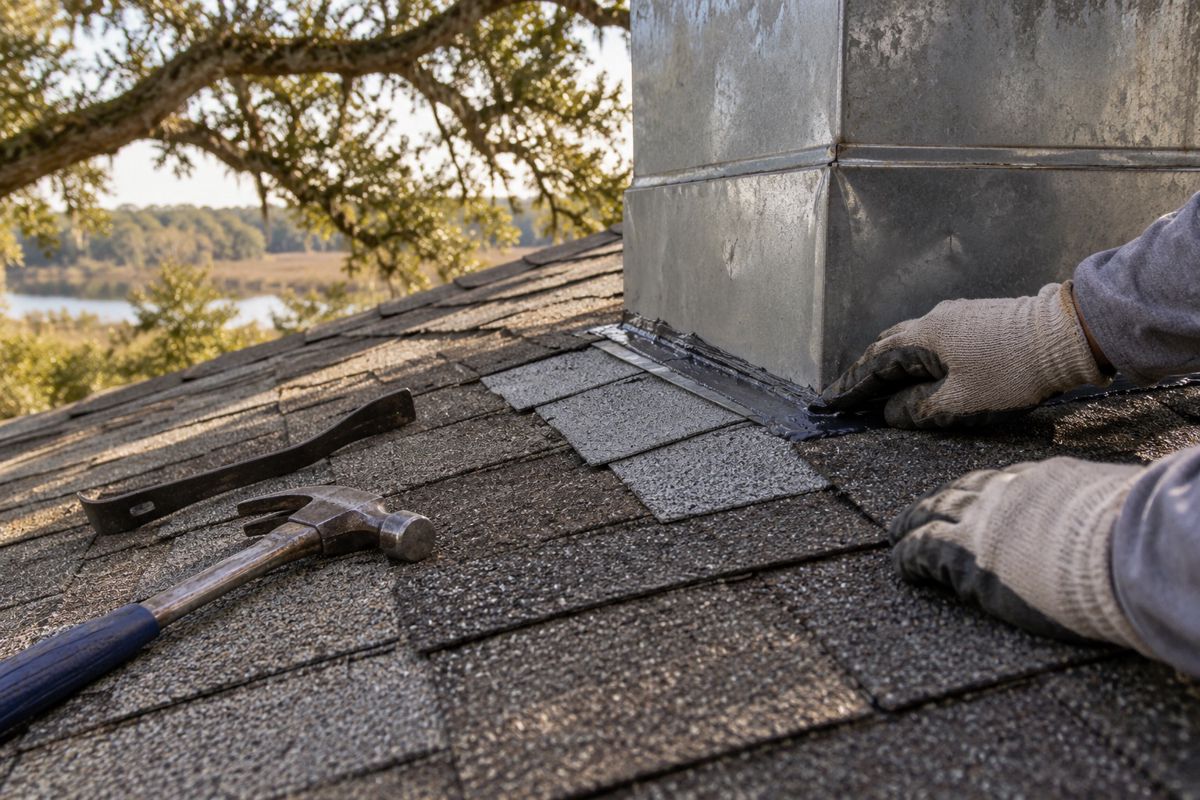
Gloved hands sealing chimney flashing on a faded shingle roof

Roof repair and leak detection

Roof repair in Austin for leaks, flashing and worn shingles

Find the real source of the leak, fix it properly and know whether the rest of the roof has life left. We quote in writing before work starts.

  • Leak source traced, not guessed
  • Photos of what was found
  • Written quote before work starts

Step 1 of 3

What do you need?

What causes roof leaks in Austin homes?

Most leaks in Austin start at a weak point, not in the middle of a healthy roof. The usual suspects are flashing around chimneys, vents and walls, cracked or lifted shingles, exposed nail heads and worn sealant around pipes. Years of strong sun dry out sealants and make shingles brittle, so small cracks open up.

Then comes the rain. Central Texas often goes through long dry spells and then gets a heavy downpour, and water finds every gap at once. Hail can bruise shingles and crack the surface without making a visible hole, so a leak may appear months after a storm.

Trees matter too. Live oaks, pecans and cedar elms drop leaves and branches that clog valleys and gutters, and water backs up under the shingles. A ceiling stain, a musty smell in the attic or daylight where it should be dark is worth a look.

How do roofers find the source of a leak?

The stain on your ceiling is rarely directly under the hole. Water travels along rafters and decking before it drops, so the real source can be several feet away. A careful leak check starts in the attic. The roofer looks for damp insulation, dark streaks on the wood and staining around nails and vents.

Then the roof surface gets a close look. That means checking:

  • flashing at chimneys, skylights, walls and valleys
  • pipe boots and roof vents
  • missing, cracked or lifted shingles
  • nail pops and damaged ridge caps
  • low spots where water pools or debris collects

In some cases a water test helps, where one section is wet down while someone watches inside. Ask the roofer to show you photos of what they found. A clear explanation of the cause is the sign of a repair that will hold. If the problem points to a worn roof overall, they should say so and talk through roof replacement as an option.

What changes the price of a roof repair?

A repair can be a small fix or a bigger job, and the price follows the work involved. We quote in writing after seeing the roof. These are the main factors:

  • How big the damaged area is. A few shingles cost far less than a whole section.
  • Where the leak is. Chimney and wall flashing take more skill than a pipe boot.
  • Roof pitch and height. Steep or tall roofs need more safety gear and time.
  • Materials. Matching older shingles can be hard, and metal and tile repairs need different parts.
  • Hidden damage. Wet decking or insulation found during the repair may need extra work.

When repairs keep coming back, spending more on patches stops making sense. A written quote for both repair and replacement lets you compare them side by side. If you suspect storm damage, see our storm and hail damage page first, as insurance may be involved.

Many repairs are finished in part of a day. Larger jobs, like rebuilding flashing or replacing a damaged section of decking, can take longer. Weather decides a lot. Roofers cannot work safely on a wet roof, so rain can push a job back.

On the day, the crew sets up ladders and protects the area around the house. Expect some noise on the roof and a little debris, which should be cleaned up afterward. If the repair is over a room that leaked, move furniture and cover what you cannot move. Keep pets inside.

Before leaving, the crew should show you what was done, ideally with before and after photos. Ask what to watch for during the next rain, and who to call if the leak returns. Some leaks have more than one source, so a second look after the next big storm is reasonable.

When should I call a roofer in Austin?

Call as soon as you notice a stain, a drip or missing shingles. Water damage spreads quietly through insulation and wood, and a small repair now can prevent a larger bill later. In the meantime, put a bucket under any drip and move belongings out of the way. Do not climb onto a wet or steep roof yourself.

Call after any hail or high-wind storm, even if nothing looks wrong from the ground. Damage often shows only up close. Call before listing your home too, since a buyer's inspector will find loose flashing and worn shingles.

You are also right to call if your roof is old and you are not sure whether repair is worth it. A roof inspection can answer that. You can start on our Austin roofing page or call (512) 555-0120.

Clear communication
Free inspections
Written estimates
Local crew

Request roof repair

Tell us what you need and we call you back.

No obligation.

Step 1 of 3

What do you need?

Questions about roofing in Austin

How much does it cost to fix a roof leak?

It depends on where the leak is, how big the damaged area is, the roof pitch and what the repair needs. A pipe boot and a failed chimney flashing are very different jobs. We do not name prices without seeing the roof. After a visit we give you a written quote that spells out what the repair covers.

Can you repair an older roof, or does it need replacing?

Often an older roof can be repaired if the rest of it is sound. If shingles are brittle, worn through or damaged across many slopes, patches may not last. A roofer should show you the condition on the roof and explain both options. A written quote for repair and for replacement makes the choice easier.

Is a roof leak covered by homeowners insurance?

It depends on the cause. Policies generally cover sudden damage from events like hail or wind, but they usually do not cover wear and tear or poor maintenance. Check your policy and ask your agent. Keep photos of the damage and any receipts for emergency steps. Your insurer, not your roofer, decides what is covered.

Why did my ceiling stain show up after the rain stopped?

Water often soaks into insulation and wood and keeps moving after the rain ends. It can also travel along rafters before it reaches the ceiling. That is why the stain is often not under the hole in the roof. Do not ignore it. A stain that grows after each rain usually means there is an active leak above.

Can I seal a leak myself with roofing sealant?

A small tube of sealant can slow a drip for a short time, but it often hides the real source and the leak returns. Climbing onto a hot, steep or wet roof is also risky. If you want to try a temporary fix, stay on a safe, dry surface and book a proper inspection soon after.

How it works

  1. Call or request a quote

    Tell us what is happening with the roof.

  2. Free inspection

    A roofer checks the roof and gives a written price.

  3. Work done right

    Clean crew, nail sweep, warranty in writing.

Ready when you are

Call now or request a quote online.

(512) 555-0120