
Skip to content

Clear communicationFree inspections

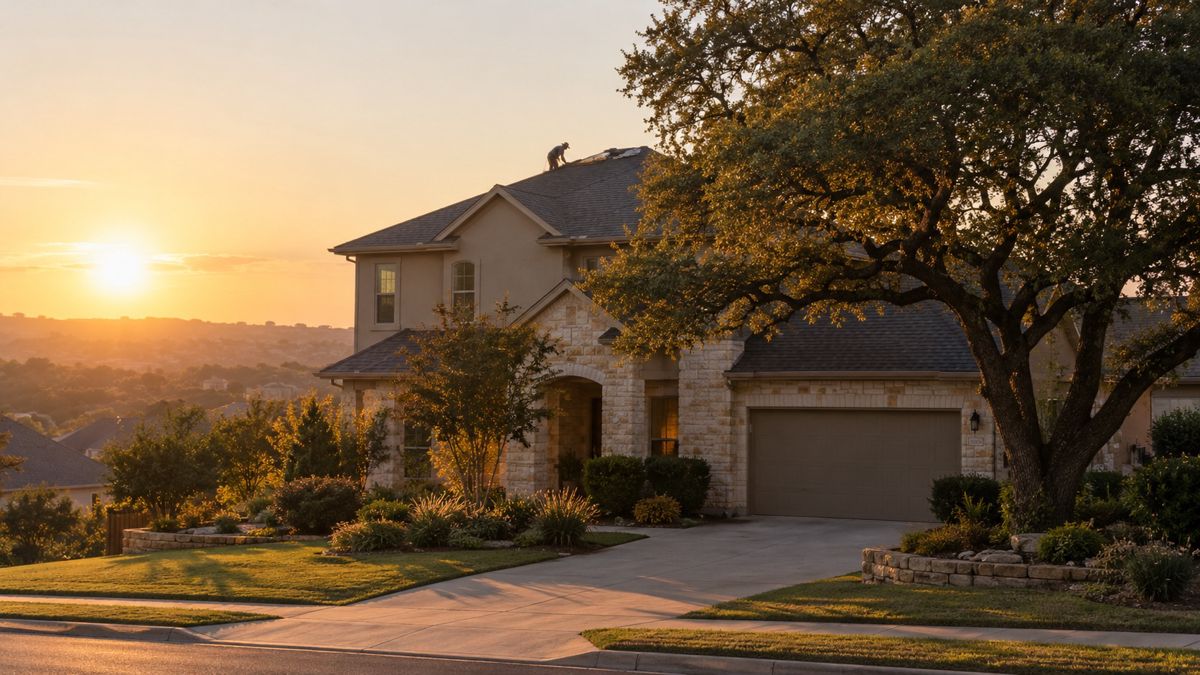
Austin home with limestone front and shingle roof under a live oak at dusk

Ranch land, venues and rural homes

Roofing in Dripping Springs, TX for ranch homes and event venues

Roof replacement, repair, hail damage, commercial roofing and inspections around Dripping Springs. Request a quote and we will confirm availability.

  • Written quotes before work starts
  • Homes and commercial buildings
  • Hail, heat and storm damage
Clear communication
Free inspections
Written estimates
Local crew

Rural roofs have their own habits

Dripping Springs lies west of Austin on US-290, in rolling Hill Country with ranchettes, large lots and a growing number of subdivisions. Many properties include more than a house: a detached garage, a barn, a workshop or a guest cottage, each with its own roof. That makes the number of roofs per property higher than in town.

Metal is a common choice on rural buildings because it sheds rain, tolerates hail better than many alternatives and works with rainwater collection. Others have shingles, tile or older corrugated panels. Our first job is to sort out which roofs matter most and which can wait.

Long driveways, wells and open exposure

Rural lots often mean long gravel driveways, gates and uneven ground, which affects where trucks can park and how far materials must be carried. Wet weather can turn a drive soft, so scheduling around rain is more than a convenience. Properties on wells and septic systems also need care so that debris and runoff do not cause trouble.

Exposure is higher in open country. Wind funnels across ridges, and hail can arrive without much warning. Cedar fever season fills gutters and valleys with fine juniper material, and in dry years, ember risk from nearby brush is a reason some owners lean toward metal or other fire-resistant roofing.

Roofing work we can quote for in Dripping Springs

Each of our five services can apply to a Dripping Springs property.

Where there are several buildings, we list each roof separately, so you can decide the order of work.

Rural jobs differ from suburban ones, and the estimate should reflect that openly. These are the main points.

  • Number of buildings. Several roofs may justify one planned project or staged work.
  • Material. Standing seam, corrugated panels, shingles and tile vary widely in cost and detail.
  • Distance and access. Long drives and soft ground add logistics.
  • Use of the building. A venue, barn or home each has its own requirements for light, sound and fire safety.

We describe what is included for each building so costs can be compared roof by roof.

Permits, venues and insurance in Dripping Springs

Rules differ across the area. Properties inside the city limits follow city permits, while many outlying parcels in the county have fewer requirements, though HOAs may still apply in subdivisions. Event venues should check local requirements for commercial use and any insurer's conditions on roofing.

For storm damage, read the policy for the wind and hail deductible, the filing deadline and how outbuildings are covered, because barns and detached structures sometimes have different terms. Texas law generally prohibits a contractor from waiving your deductible. Photograph every building after a storm, not only the main house.

Requesting a quote in Dripping Springs

Send the short form or call (512) 555-0120. We serve Dripping Springs from outside the area, so availability is confirmed after your request.

  1. List the buildings with roofs and their materials.
  2. Tell us about the driveway, gates and any wet-weather limits.
  3. Describe the damage or reason for the request.
  4. Send photos of each roof, plus any interior stains.
  5. We inspect the property and follow up with a written estimate.

If any building houses animals, feed or equipment, mention it, because we plan the work to protect what is inside. Gate codes and the easiest route in are also worth noting.

Get a quote in Dripping Springs

Tell us what you need and we call you back.

No obligation.

Step 1 of 3

What do you need?

Questions about Dripping Springs

Is a metal roof sensible on a Dripping Springs barn or outbuilding?

Often, yes. Metal is durable, relatively light and sheds water and debris. It can be loud in rain and may dent in large hail. Proper fasteners, underlayment and ventilation are important, especially if animals or equipment are inside. We can compare panel types and explain what suits each building. Insulation or a sound-deadening layer can reduce rain noise if the building is used for living or work.

Do wedding venues need special roofing attention?

A leak during an event is costly, so planning matters. Venues often have unusual roof shapes, large spans and decorative features that complicate flashing and drainage. Scheduling work outside booking seasons helps. Check insurance and local requirements for commercial use, and tell us about event dates when you request an estimate.

Can I collect rainwater from any roof?

Not every roof is suitable. Metal is widely used for harvesting because it is smooth and does not shed particles into the water, while some shingles and coatings are less suitable. If you rely on rainwater, mention it before replacement so materials, gutters and flashing are chosen appropriately. Gutters, downspouts and storage tanks make most sense when planned together with the roof.

How does a long gravel driveway affect roofing work?

It changes logistics. Heavy trucks may struggle on soft or narrow drives, and materials may need to be staged at a gate or carried further. Tell us about gates, culverts and wet-weather problems. We plan delivery and dumpster placement with those limits so the work does not damage your driveway.

What should I check after a storm on a ranch property?

Walk each building, looking for loose or missing panels, bent flashing, dented vents and signs of water inside. Photograph everything with dates, and check outbuildings as well as the house. Then arrange an inspection. Some damage is visible only from the roof, and records help if you file an insurance claim.