Skip to content

Clear communicationFree inspections

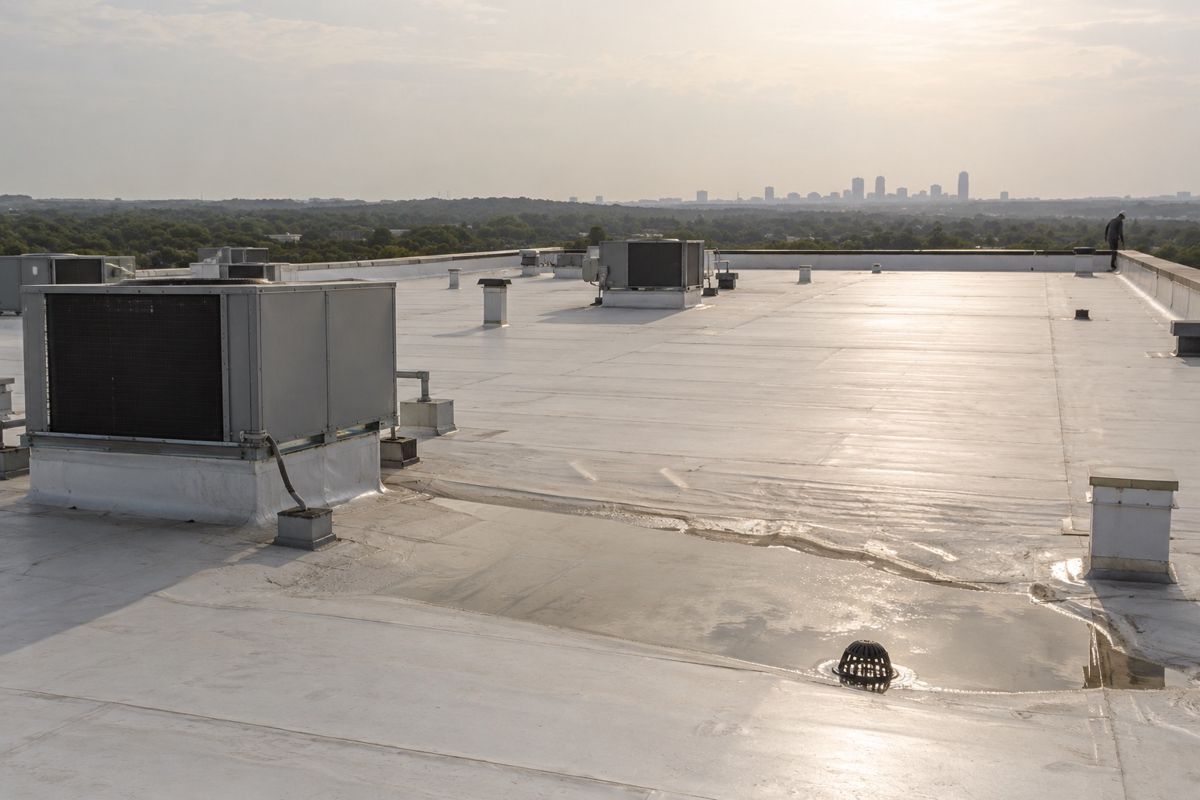
Flat white commercial roof with rooftop HVAC units and drains

Commercial roofing in Austin

Commercial roofing in Austin for flat, low-slope and metal roofs

Roof repair, recovery and replacement for offices, shops and warehouses. We inspect first and quote in writing before work starts.

  • Flat, low-slope and metal roofs
  • Inspection before any quote
  • Written scope for owners and managers

Step 1 of 3

What do you need?

What does commercial roofing involve in Austin?

Commercial roofing covers the roofs on offices, shops, restaurants, warehouses, churches and apartment buildings. Most are flat or low-slope, which means they are built and maintained differently from a pitched home roof. Water has to leave through slope, scuppers and drains, and the seams of the roof membrane matter a great deal.

Common systems include single-ply membranes such as TPO and PVC, modified bitumen, built-up roofs and metal roofing, including standing seam. Which fits depends on the building, the budget and how long you plan to own it. Ask your contractor to explain why they recommend a system, and what the maker's warranty covers.

Work can mean fixing a leak, restoring an aging roof or a full tear-off and replacement. A careful inspection first will tell you which of those makes sense for your building.

What problems do commercial roofs have in Central Texas?

Austin weather is hard on flat roofs. Intense summer heat expands and shrinks membranes every day, and over time that stress opens seams and cracks flashing. Strong UV breaks down surfaces and sealants. Heavy rain shows drainage trouble fast.

  • Ponding water. Standing water after a storm adds weight and wears out the membrane.
  • Clogged drains. Leaves and debris from oak and pecan trees block scuppers and drains.
  • Rooftop equipment. HVAC units, vents and conduit create many penetrations where leaks begin.
  • Hail. Hail can bruise membranes and dent metal panels, and leaks may show up later.
  • Foot traffic. Service techs walking on a roof can cut or scuff the surface.

Many of these problems are cheaper to deal with early. A small seam repair costs far less than a wet ceiling, ruined stock and an unhappy tenant. A regular look at the roof, especially after storms, is a sensible habit. A quick roof repair now often avoids a bigger job later.

What changes the price of a commercial roof?

We do not name prices before we have seen the building. A commercial roof can be a small canopy or an acre of warehouse, and the price follows the scope. The main factors are:

  • Roof area and shape. More area, more edges and more levels mean more labor.
  • System chosen. TPO, modified bitumen, built-up and metal sit at different price levels.
  • Tear-off or recover. Removing the old roof costs more than installing over a sound one, where codes allow it.
  • Drainage and insulation. Tapered insulation, new drains or crickets add cost but fix ponding. Energy code rules may affect insulation.
  • Rooftop equipment and access. Many HVAC units, tight sites and the need for a lift or crane add time.
  • Building use. Operating hours and tenant needs can shape the schedule and the labor.

A written quote should list the system, the thickness or gauge, the flashing details and the warranty terms.

Timing depends on roof size, system, weather and how much of the roof is open at once. A small repair may take part of a day. A full replacement on a larger building can take days or weeks. Ask for a written schedule and a plan for rain days.

Most commercial roofs are done in phases, so only part of the roof is open at any time and the rest stays watertight. Talk through the details before work starts:

  • which areas of the roof, parking and entrances will be affected
  • noise, dust and the hours the crew will work
  • how rooftop equipment will be protected or shut down
  • how the crew will keep customers, staff and tenants safe
  • who to call on site if something comes up

A good crew leaves the site clean and walks the roof with you afterward. Ask for photos of the finished work for your records.

When should a building owner call, and what should I ask a contractor?

Call when you see stains on ceiling tiles, ponding water that stays for days, lifted seams, cracked flashing or after any hail or wind storm. Call before you buy or sell a building, too. A roof inspection gives you a clear picture of the roof's condition and the likely cost of keeping it sound.

When you talk to a contractor, ask these questions:

  • Can I see proof of liability insurance and workers' compensation?
  • Can you share references from similar buildings in the Austin area?
  • What is in the written scope, and what is not?
  • What warranty applies, and who stands behind it?
  • How will you protect the building and my tenants during the job?

Texas does not issue a state roofing license, so these checks matter. Start on our Austin roofing page or call (512) 555-0120.

What you can expect

1

Clear communication

2

Free inspections

3

Written estimates

4

Local crew

Request commercial roofing

Tell us what you need and we call you back.

No obligation.

Step 1 of 3

What do you need?

Questions about roofing in Austin

What types of commercial roofs do you work on?

Flat and low-slope roofs on offices, shops, restaurants and warehouses are the usual work, along with metal roofs. Common systems include TPO, PVC, modified bitumen, built-up and standing seam metal. Tell us what you have when you call. We look at the roof first and explain what we would recommend and why.

Should I repair, coat or replace my commercial roof?

It depends on the age, the type of roof and how much of it is wet or worn. A sound roof with isolated problems may only need repair. A roof with widespread damage may need replacement. Ask for the inspection findings and the options in writing so you can weigh the cost of each over the years you plan to own the building.

Will the roofing work disrupt my business?

Some noise and activity cannot be avoided, but much can be planned. Work is often done in phases, so the roof stays closed over areas in use. Tell us about your hours, customers and equipment. We can talk through the schedule, parking, entrances and safety before the job starts, and agree it in writing.

Does commercial roof damage from hail get covered by insurance?

It may, depending on your commercial policy and the cause of damage. Many policies have a wind and hail deductible and a filing deadline. Photograph the damage, call your insurer and keep records. A roofer can document the damage and write an estimate, but the insurance company decides coverage.

How often should a commercial roof be inspected?

Many owners have the roof checked on a regular schedule, and after any hail or wind storm. Clear drains and check seams, flashing and rooftop equipment penetrations, since those are common leak points. Your roof manufacturer's warranty may also have maintenance conditions, so read it. A written inspection report is useful for budgeting.

How it works

  1. Call or request a quote

    Tell us what is happening with the roof.

  2. Free inspection

    A roofer checks the roof and gives a written price.

  3. Work done right

    Clean crew, nail sweep, warranty in writing.

Ready when you are. Call now or request a quote online.