
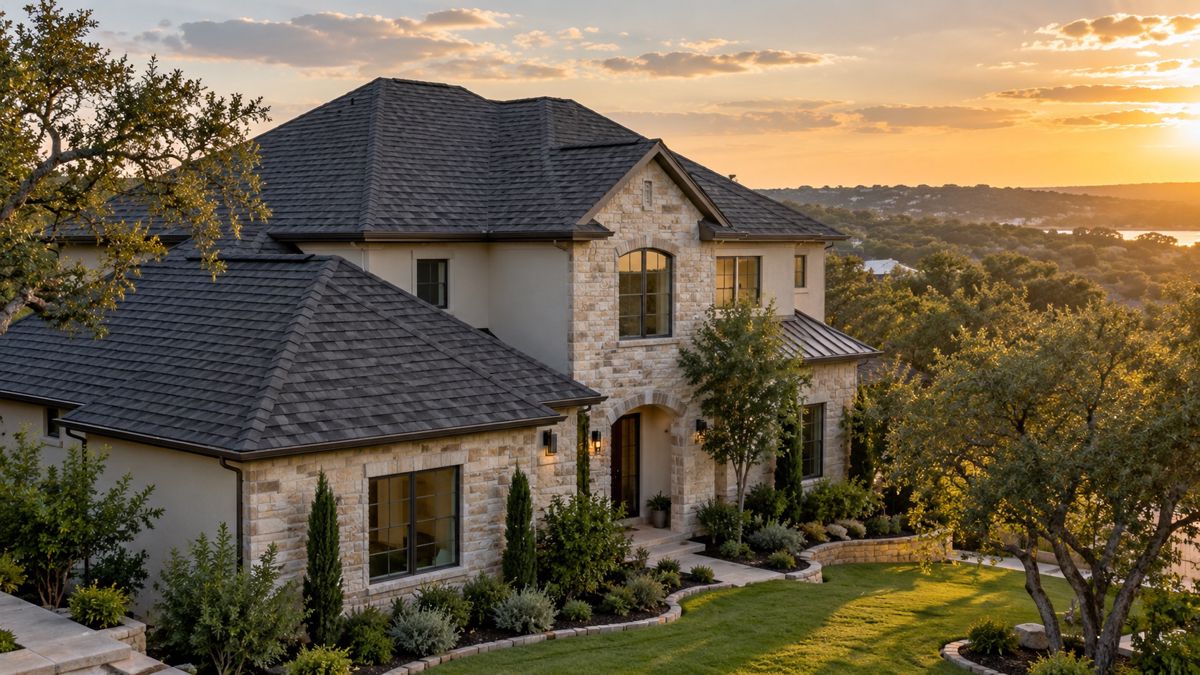
For a typical single-family home in Austin, a new asphalt shingle roof often starts around $9,000 and can run into the low twenty thousands. Metal and tile cost more, and a small, simple roof can come in lower. Those are broad market ranges for the US, not a quote from Austin Roofers. The only price that counts is a written quote for your roof, after someone has looked at it.
The rest of this guide explains what moves the number in Central Texas, so you can read a quote with confidence.
What is a rough price range for a new roof in Austin?
Roofers talk in roofing squares, where one square is 100 square feet of roof. Most price guides use square feet instead. As a rough guide only:
- Asphalt shingles: roughly $4 to $9 per square foot installed.
- Impact-resistant shingles: usually a step above standard shingles.
- Standing seam metal: roughly $9 to $20 per square foot installed.
- Concrete or clay tile: roughly $10 to $22 per square foot installed.
The roof is bigger than the floor plan of the house because of pitch and overhangs. A single-story home of about 2,000 square feet may have a roof closer to 2,400 or 2,800 square feet, depending on the design. Multiply that by the ranges above and you can see why totals vary so widely. Material prices and labor costs shift from year to year, so treat these numbers as a starting point.
What drives the cost of a roof in Austin?
Two roofs that look alike from the street can be priced very differently. These are the main factors:
- Size and pitch. More area and steeper slopes mean more labor and more safety equipment.
- Material. Shingles, metal and tile sit at different price levels, and so do different lines within each.
- Layers to remove. A second layer of old shingles takes longer to tear off and haul away.
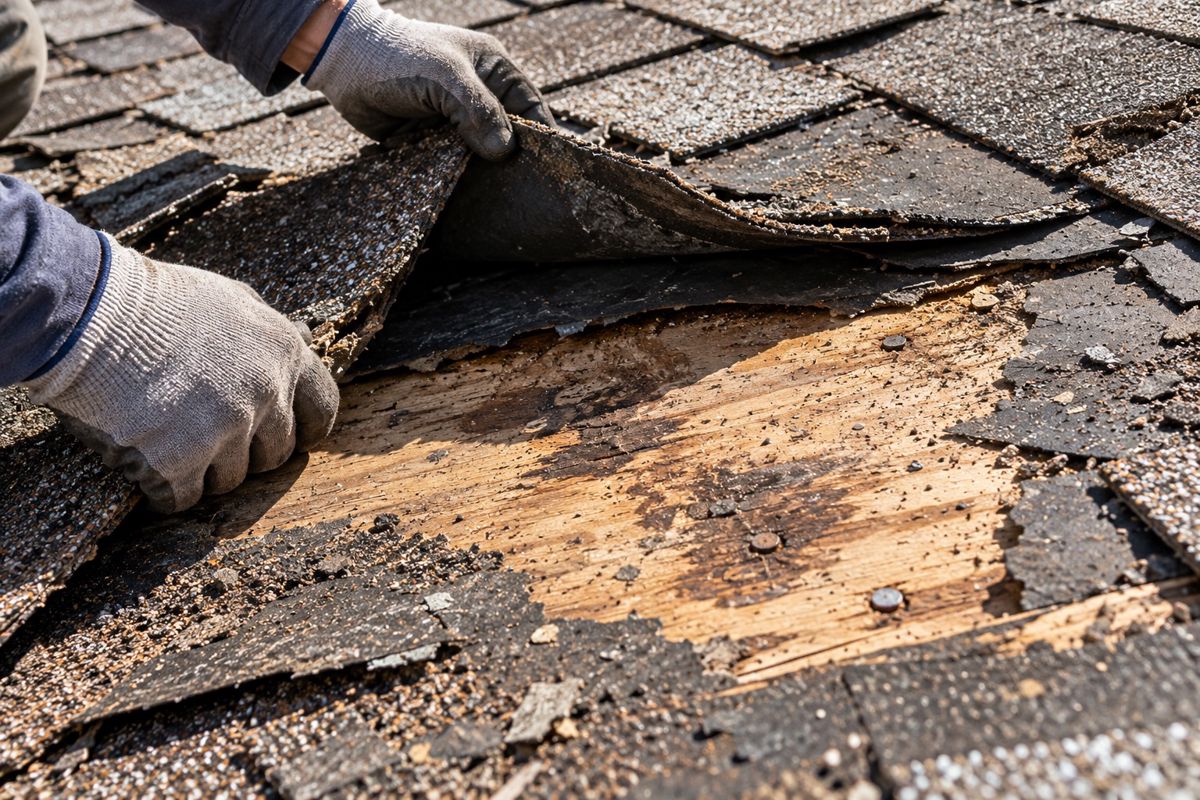
- Deck condition. Soft or rotted plywood has to be replaced, and you only find out once the old roof is off.
- Complexity. Valleys, dormers, skylights and chimneys all take more time. Many Hill Country homes have several rooflines and big overhangs, which adds to the work.
- Access. Tight lots, steep driveways and mature live oaks can slow a crew down.
Austin heat matters too. A hot attic cooks a roof from underneath, so good ventilation is part of a sound job, not an extra.
How do roofing materials compare in Central Texas?
Asphalt shingles are the most common choice in Austin neighborhoods. They cost less up front and suit most homes, but sun and heat wear them faster than many people expect.
Impact-resistant shingles, often sold as Class 4, are built to stand up better to hail. Some Texas insurers offer a premium discount for them, though that varies by company, so ask your agent before you decide.
Metal roofs are popular on Hill Country homes. They cost more at the start, they shed heat well and they can last a long time. Hail can dent them, and some insurers treat metal differently, so check your policy.
Tile is heavy and suits Spanish and Mediterranean style homes. The structure must be able to carry the weight, which can add cost. Ask any contractor to explain why they recommend a material for your house in particular.
Do hail and insurance change what you pay?
They can change it a lot. Hail is a regular risk in Central Texas, and if a storm damaged your roof, your homeowners policy may pay part of the cost of repair or replacement. Whether it does, and how much, depends on your policy and on the insurer's assessment.
- Many Texas policies carry a separate wind and hail deductible, often a percentage of the home's insured value rather than a flat sum.
- Some policies pay the depreciated value first and release the rest after the work is complete.
- Policies often have a filing deadline, so do not wait long after a storm.
- Texas has rules against contractors waiving or absorbing your deductible. Be careful with any offer of a free roof.
If you think hail hit your roof, our page on storm damage roof repair in Austin walks through the first steps.
Which costs surprise homeowners?
Most surprises come from what is hidden under the old roof or in the paperwork. Ask your contractor how each of these is handled:
- Rotted decking found after tear-off, and how it is priced per sheet.
- Permit fees, where your city requires a permit for re-roofing.
- HOA approval, which can delay a start if the shingle color or style needs sign-off.
- Code-related upgrades such as drip edge, underlayment and ventilation.
- Flashing at chimneys, skylights and walls, which is often replaced rather than reused.
- Dumpster placement and haul-away on tight lots.
How do you compare roofing quotes fairly?
A low number is not always a better deal. Line the quotes up on the same terms:
- Check that each quote covers the same roof area and the same tear-off.
- Compare the material by brand and product line, not just by type.
- Look at what is included for underlayment, flashing, vents and ridge cap.
- Ask how rotted decking will be handled and what it costs.
- Confirm who pulls the permit and who cleans up.
- Read the warranty terms in writing and ask what they cover and who stands behind them.
- Ask for proof of liability insurance and workers' compensation. Texas does not issue a state roofing license, so your own checks matter.
What is the next step?
Get a roof inspection and a written quote based on what is actually on your roof, then compare it with at least one more. If your roof is worn out, leaking in several places or damaged across most slopes, read about roof replacement in Austin to see what the job involves and what to expect on the day. If you are not sure the roof needs replacing, a repair may be enough, and an inspection will tell you which way to lean.